

 Türkçe
 Español
 Deutsch
 Italiano
 Русский
 中文
 Français
 العربية
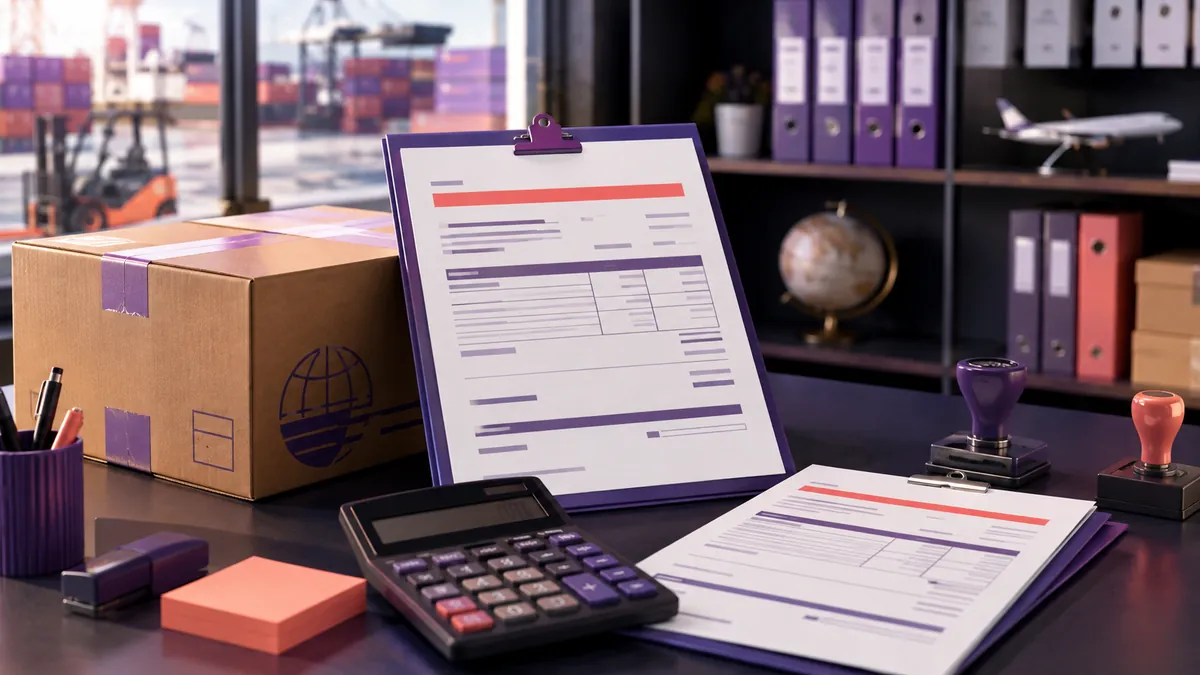
A commercial invoice records a sale, while a proforma commonly explains a non-sale or preliminary transaction; both must state truthful product and value information.
What should be clarified first?
The document title alone does not determine customs treatment. Samples, gifts, repairs and sales must describe contents, purpose and value consistently.
Consistency is the basis of a smooth customs process. The product description, HS code, quantity, unit value, total value, shipment purpose and party details should match both the documents and the physical contents.
Planning the process step by step
Complete shipper and consignee details, then list every product separately with a clear name, quantity, unit value, currency, origin and HS code. Show freight separately from product value where applicable.
- Use a traceable invoice number and date.
- Replace vague terms such as “part”, “accessory” or “sample” with the actual product.
- Check that line quantities and values reconcile mathematically to the totals.
Factors that affect cost and transit time
Do not compare quotes only by the first transport price shown. Dimensional weight, remote-area service, fuel, customs presentation, additional handling and local-delivery conditions can change the total. Estimated transit time can also vary with booking cut-off, flight or line-haul capacity, weekends and customs review.
An incomplete or contradictory invoice can cause a customs delay longer than the transport itself. Correction and storage costs often exceed the effort of preparing the document correctly.
Documents and destination checks
Commercial shipments should have an invoice or proforma with a clear product name, quantity, unit value, total value, currency, origin and purpose. Verify the consignee name, telephone, email, full address and postal code before booking. Check separately whether the product or destination requires an approval or permit.
Common mistakes to avoid
Common problems include estimating dimensions, using a vague content description, understating value or omitting consignee contact details. Another mistake is treating transit time as flight time alone and ignoring customs clearance and final-mile delivery.
Declaring zero value merely because a document is proforma, or showing inconsistent sale values, increases review risk.
A short pre-shipment checklist
- Measure the parcel’s actual weight and three outer dimensions again.
- Match the product description, quantity and value against the documents.
- Verify the consignee address, postal code and contact channels.
- Check the destination’s current acceptance and import requirements.
Before printing, compare every line with the packed contents and retain a signed digital copy.
Important note: Carrier and customs rules can change by product, route and date. Confirm the current requirements before booking; this guide is not a substitute for case-specific customs or legal advice.